News
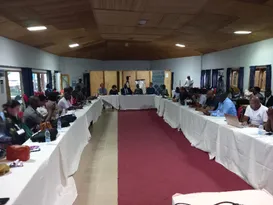
Regional training on methodological support for integrating the Global Biodiversity Framework into an inclusive and multi-stakeholder national process
At the end of the 15th United Nations Conference on Biological Diversity (CoP15), held in Montreal, Canada in December 2022, the 196 parties to the Convention on Biological Diversity (CBD) adopted the Kunming-Montreal Agreement on the Global Biodiversity Framework. States commit to it on various issues, including achieving the conservation of 30% of land and marine surfaces through a well-connected network of protected areas (marine, coastal, terrestrial, and freshwater) and Other Effective Area-based Conservation Measures (AMCE) at the global level by 2030; the restoration of 30% of degraded ecosystems; and the increase of funding for developing countries for the conservation and sustainable use of biodiversity (AMCE) at the global level by 2030; the restoration of 30% of degraded ecosystems; and the increase of funding for developing countries for the conservation and sustainable use of biodiversity.
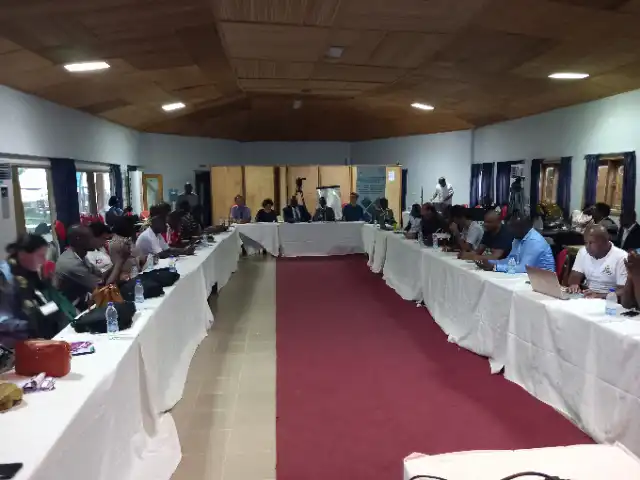
To this end, the Institut de la Francophonie for Sustainable Development (IFDD), with its partners, provides support to French-speaking countries in the form of (i) training, (ii) provision of tools, (iii) provision of an information and sharing file and (iv) establishment of frameworks for consultation and networking. Thus, IFDD organized, in collaboration with the Republic of Côte d'Ivoire, from 30 May to 1 June 2023, from 30 May to 1 June 2023, in Abidjan, a training workshop on the methodological support for integrating the Global Biodiversity Framework into an inclusive and multi-actor national process in an inclusive and multi-actor national process for French-speaking countries in Africa.
At the end of the workshop for French-speaking countries, the following results will be achieved:
▪ 50 national actors master the content and scope of the Global Framework;
▪ They acquire tools that contribute to the updating of SPANBs;
▪ They decipher the monitoring indicators and are in a position to integrate them at the national level;
▪ They master the format and content options of the revised SPANBs;
▪ They take into account biodiversity, climate and sustainable land management and, where appropriate, other relevant multilateral environmental agreements;
▪ They can define their priorities and future steps in their national processes;
▪ They learn about best practices for updating SPANBs;
▪ They have a French-speaking channel for sharing information and networking.
Published on
2023 Jun 01Countries

Côte d'Ivoire