Ecosystem
Ecosystem
Published on
2022 May 13Aspects of the geomorphology of Côte d'Ivoire
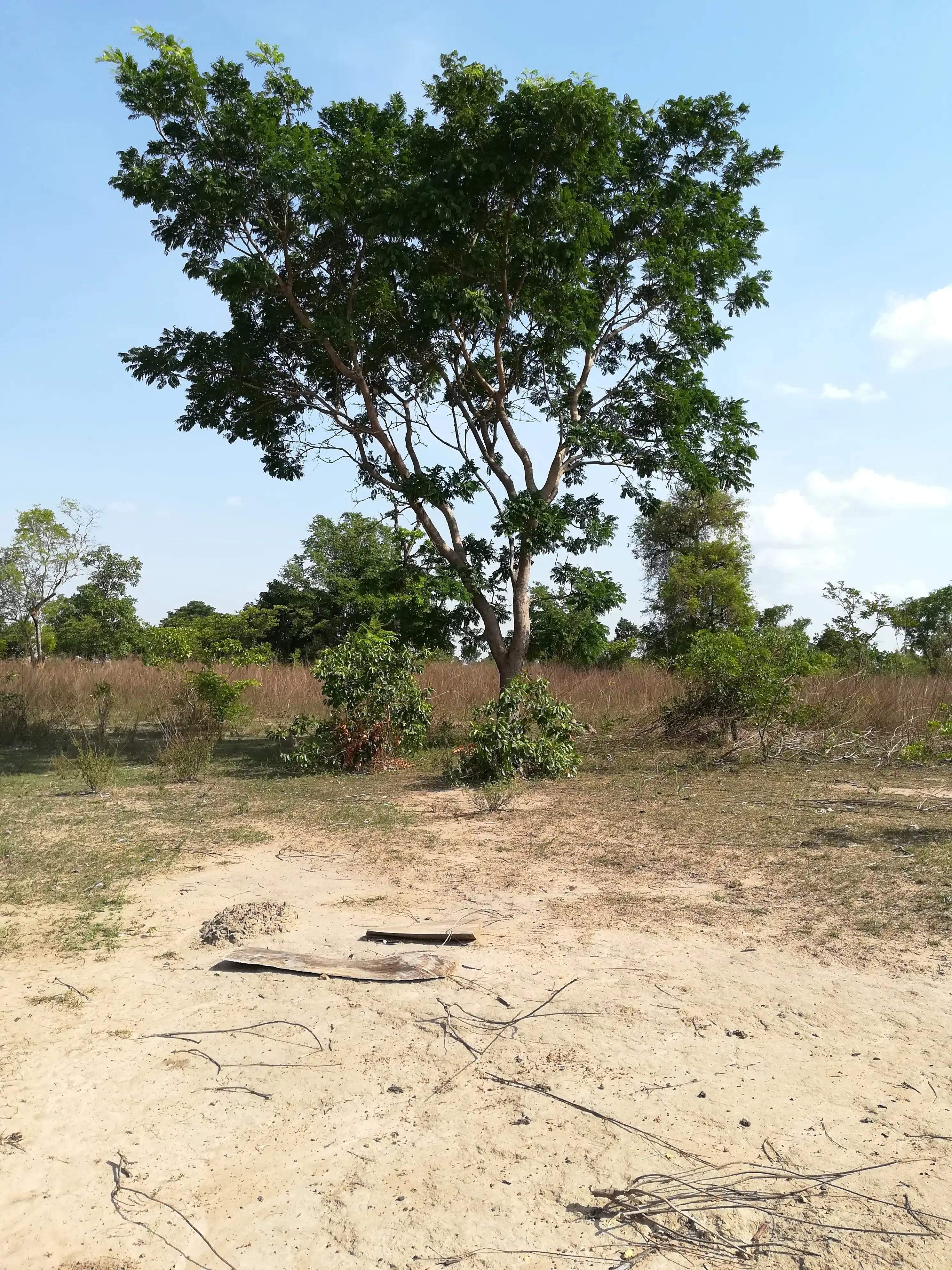
Avenard (1971). Côte d'Ivoire, like a large part of Africa and most of West Africa, represents the “triumph of horizontality”. Few things distinguish its landscapes from other landscapes on the West African platform. The unity and overall flatness that emerge from this are obviously associated with the general appearance of the base, which slopes from north to south in the direction of the Atlantic with a regular slope, but make it difficult to define large groups. Admittedly, this southern fall did not occur in a single block, and more or less collapsed panels were created, and Côte d'Ivoire seems to cover three of them: the highest would be the most western, around Man, the most collapsed, the most collapsed being the one currently occupied by the countries of the lagoons. But most of the modeling is undulating, characterized by a succession of subaplaned and ultimately very monotonous hills, although sometimes interspersed with higher residual reliefs, as if placed on the Penelaine. From north to south, we pass from a landscape of plateaus developed into a glaze to that of a plain with a poorly organized or poorly organized hydrographic network, with an intermediate zone that is more or less well developed, and whose walking character is visible in the landscape. And beyond this impression of continuity, the observer is quickly confused, because as Rougerie says: “in the uniformity and monotony of the West African block, defining countries is not easy: reliefs that are difficult to define, geological formations that are interminably developed, interminably developed, passing from one term to another through insensitive transitions, river basins made of disharmoniously joined elements.” Moreover, in detail, there is often an impression of micro-partitioning, of evolution in scattered order and ultimately of discontinuity and fragmentation. All this tends to give a country full of nuances, a bit like the stains of an impressionist painting... In fact, other influences are being felt and relaying structural data: it is increasingly obvious that climatic variations, at least those of the Quaternary period, have deeply marked these landscapes; it is also certain that differences are emerging depending on whether one is in a shale or granite province. Finally, whether the presence of the forest or the savannah is a cause or a consequence, it is undeniable that landscapes are marked by a certain opposition depending on whether one is in one or the other of these plant formations.
The link to the website