Image or Video
Image or Video
Height
905 pxWidth
1209 pxFile Type
JPEG ImageFile Size
181 kBCreated Date
2022 Jun 29Updated Date
2026 Nov 05Published on
2022 Jun 29Countries

Côte d'Ivoire
The coastal riparian thicket of the Assinie Canal
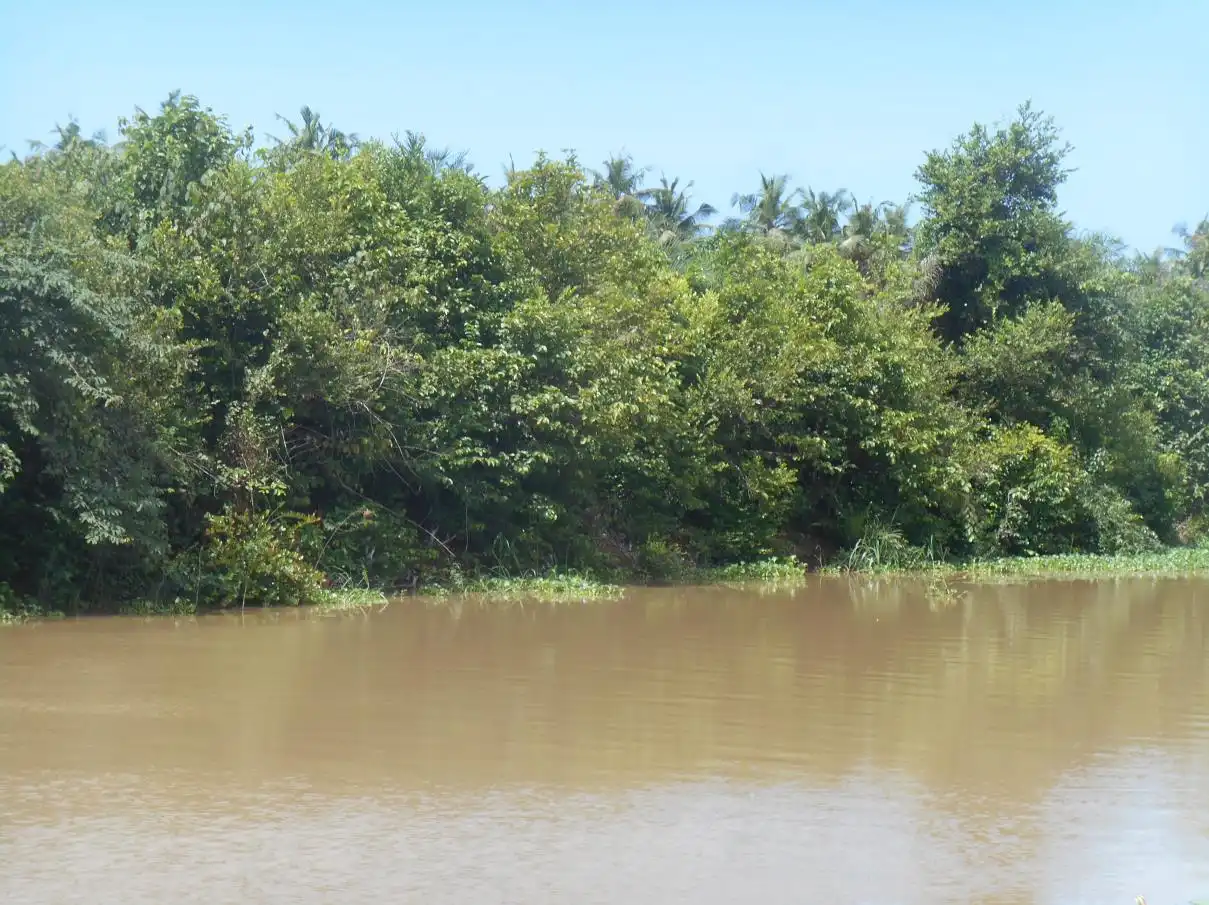
Coastal thickets are plant formations that are found in the coastal sector in contact with the sea on poorly evolved soil. According to Guillaumet and Adjanohoun (1971), they are either closed formations with an upper stratum protecting an inner sciaphile stratum, or very open formations penetrated to the ground by solar radiation. When the thickets are well preserved (Figure 4), they contain species that are almost all special to these biotopes: Chrysobalanus orbicularis Schumach (Chrysobalanaceae), Chrysobalanus icaco L. (Chrysobalanaceae), Eugenia whytei Sprague (Myrtaceae), Dalbergia ecastaphyllum (L.) Taub. (Fabaceae). However, degraded thickets are enriched with forest species such as Capparis erythrocarpos Isert (Capparidaceae), Acridocarpus smeathmannii (DC.) Guill. & Perr. (Malpighiaceae), Baphia nitida Lodd (Fabaceae).
The 48-kilometer long artificial navigation canal of Assinie is located in the eastern coastal zone of Côte d'Ivoire, precisely in the Sud-Comoé region, which is located between 2°70' and 3°88' West longitude and 5°08' and 6°26' North latitude. The Assinie navigation canal extends between the department of Grand-Bassam and the sub-prefecture of Assinie-Mafia. This waterway joins the Ebrié lagoon system to the west and the Aby lagoon system to the east.
Height
905 pxWidth
1209 pxFile Type
JPEG ImageFile Size
181 kBCreated Date
2022 Jun 29Updated Date
2026 Nov 05Published on
2022 Jun 29Countries
Côte d'Ivoire