News
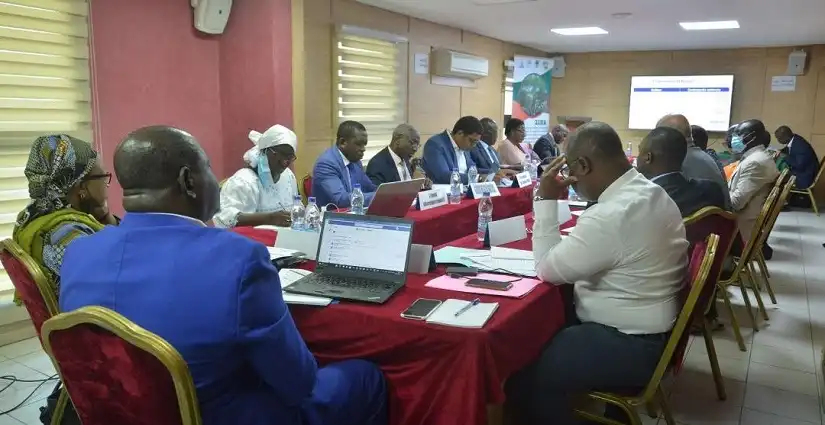
The erosion of the forest and biodiversity is a persistent reality (Pdte COPIL)
Abidjan, April 22, 2022 (AIP) - The erosion of the forest and therefore that of biodiversity in Côte d'Ivoire has become a persistent reality, assured Friday, April 22, 2022 in Abidjan, the president of the steering committee (COPIL) of the project “Sustainability and scaling approaches for the transformation of the management, restoration and conservation of forest landscapes and biodiversity in Côte d'Ivoire” (FOLAB), Dr. Jeanne N' Train.
Dr. N'Tain was speaking as a representative of the Minister of Environment and Sustainable Development, Jean-Luc Assi, at the first meeting of the FOLAB project steering committee, in the presence of representatives of the Green Fund for the Global Environment (GEF), Koné Alimata and the United Nations Environment Programme (UNEP), Adam Buhari.
“The damage from this erosion will not be undone by just a few well-intentioned actions, whether it's a few evictions or a few local replanting programs,” she said. For Ms. N'Tain, the government and all actors must look at both the totality of forestry and protected areas, taking into account all the ecological, agricultural, industrial, socio-economic and security factors involved.
The project coordinator, Patrick Pedia, explained that the FOLAB project aims to set up and test a sustainable financing mechanism at the national level in order to fight against deforestation and forest degradation and support the effective, sustainable management of protected areas in Côte d'Ivoire.
He noted that a strategy based on three components has been selected, including support for the development of an institutional, political and legal framework favourable to REDD+ and Payment for Ecosystem Services (PES). “The project will support the modification or establishment of institutional, political and legal frameworks conducive to the integration of rural land management and natural resource management with PES and REDD+ mechanisms in different sectors”, he noted. indicated.
He mentioned the establishment of a national financial mechanism and the management of the application of PES in mangroves. “The project will support the establishment of this mechanism within communities, in an exemplary perspective. Component 2 also includes an important mangrove restoration component involving NGOs and communities that directly benefit from the services provided by the mangrove ecosystem,” he said.
Mr. Pedia also referred to the sustainable management of poorly supported protected areas and surrounding ecosystems. “Recognizing the fact that well-managed protected areas are an asset for the in situ conservation of biodiversity and adaptation to climate change, the project is part of a dynamic of consolidating these achievements,” he said.
Today, Côte d'Ivoire has only two million hectares of forests, nearly 90% less than in the early 1960s. The drastic reduction in forest cover has immeasurable consequences on climate change, biodiversity and ecosystem services, it is noted.
Published on
2022 Apr 23Countries

Côte d'Ivoire