Project
Project
Multivariate approach for the identification of invaded biotopes and plant species indicative of invasion by Chromolaena odorata (L.) R.M.
This project was funded by the International Foundation for Science (IFS). It was awarded to Dr. Gouli Gnanazan Zinsi Roseline with the number IFS grant No: I-1-D-6075-1. He was interested in biological invasions in Côte d'Ivoire.
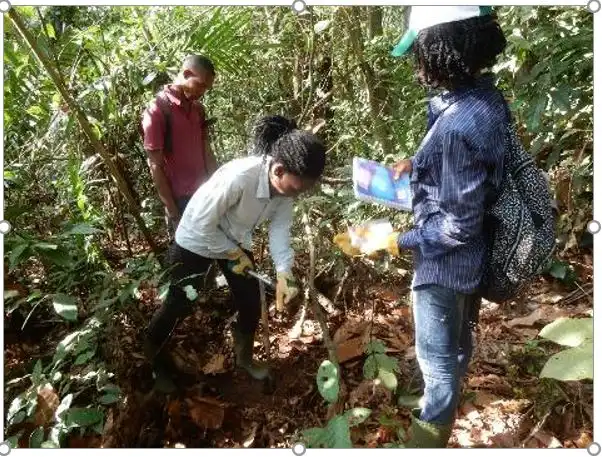
Biological invasions represent a major challenge for conservation biologists because of the numerous impacts on local communities and soil chemistry. Chromolaena odorata proves to be a good example of a case study. Preliminary studies conducted in the Banco National Park in Côte d'Ivoire (IFS collaborative project J/5728-1) have shown that it represents a danger to the biodiversity of the Park in that it modifies and reduces the floristic diversity of native species and the chemical composition of the soil. In this project, through a multivariate approach that combines both floristic and edaphic parameters (chemical and granulometric composition of the soil), we want to identify species indicative of ecosystems invaded by C. odorata. To do this, we have chosen four national parks that will be studied and compared: the Banco National Park in Abidjan (coastal relic forest located in an urban area), the Azagny National Park (coastal relic forest subject to intense human pressures), the Marahoué National Park (forest-savannah transition zone) and the Taï National Park (Biosphere Reserve). Most of these parks have never been the subject of biological invasion studies. The identification of invaded biotopes, plant communities associated with C.odorata and the species indicative of the invasive C. odorata will allow us to know the invasive species and thus to optimize actions to combat the species.Biological invasions represent a major challenge for conservation biologists because of the numerous impacts on local communities and soil chemistry. Chromolaena odorata proves to be a good example of a case study. Preliminary studies conducted in the Banco National Park in Côte d'Ivoire (IFS collaborative project J/5728-1) have shown that it represents a danger to the biodiversity of the Park in that it modifies and reduces the floristic diversity of native species and the chemical composition of the soil. In this project, through a multivariate approach that combines both floristic and edaphic parameters (chemical and granulometric composition of the soil), we want to identify species indicative of ecosystems invaded by C. odorata. To do this, we have chosen four national parks that will be studied and compared: the Banco National Park in Abidjan (coastal relic forest located in an urban area), the Azagny National Park (coastal relic forest subject to intense human pressures), the Marahoué National Park (forest-savannah transition zone) and the Taï National Park (Biosphere Reserve). Most of these parks have never been the subject of biological invasion studies. The identification of the invaded biotopes, of the plant communities associated with C.odorata and the species indicative of the invasive C. odorata will allow us to know the invasive species and thus to optimize actions to combat the species.